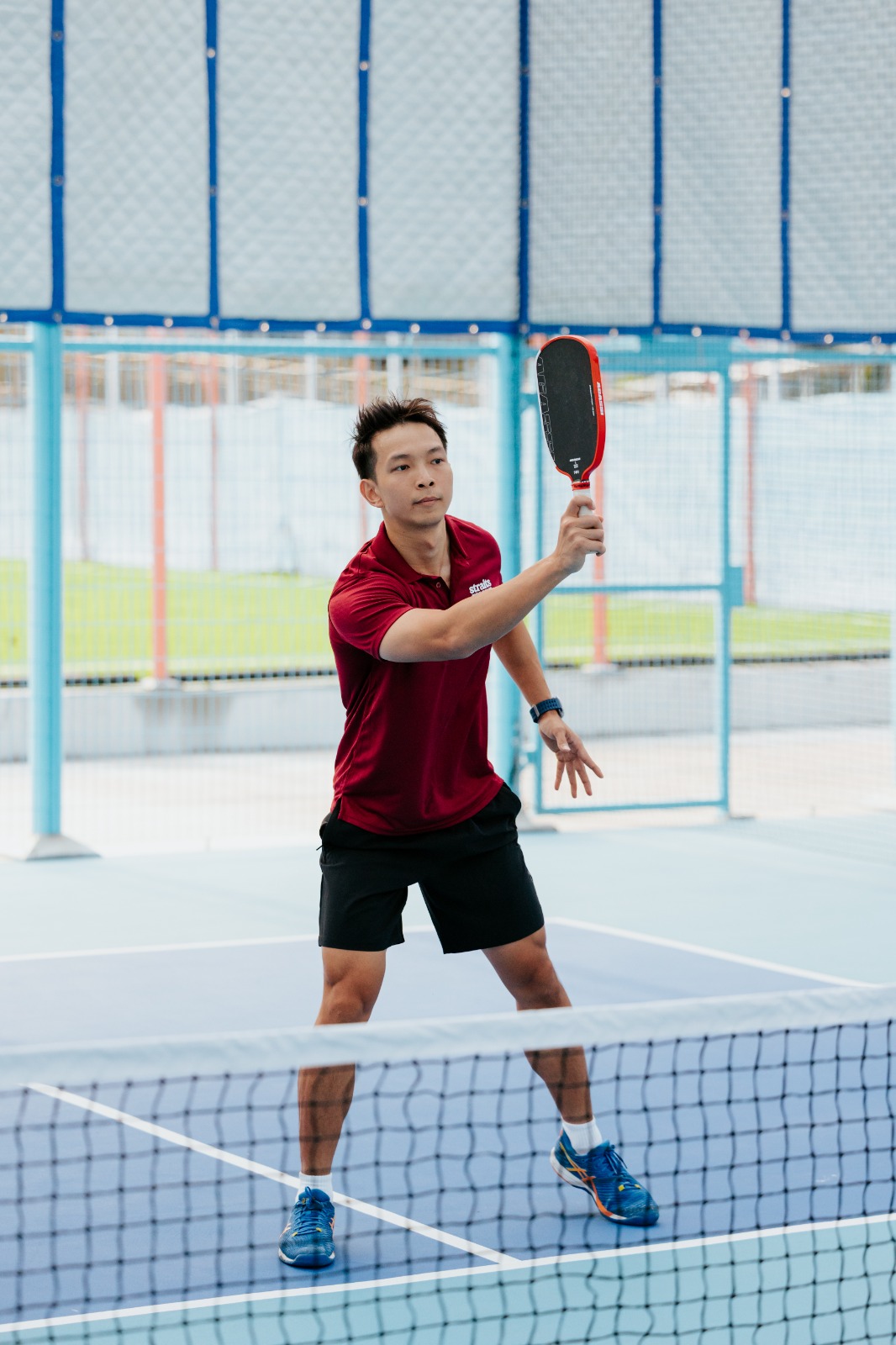
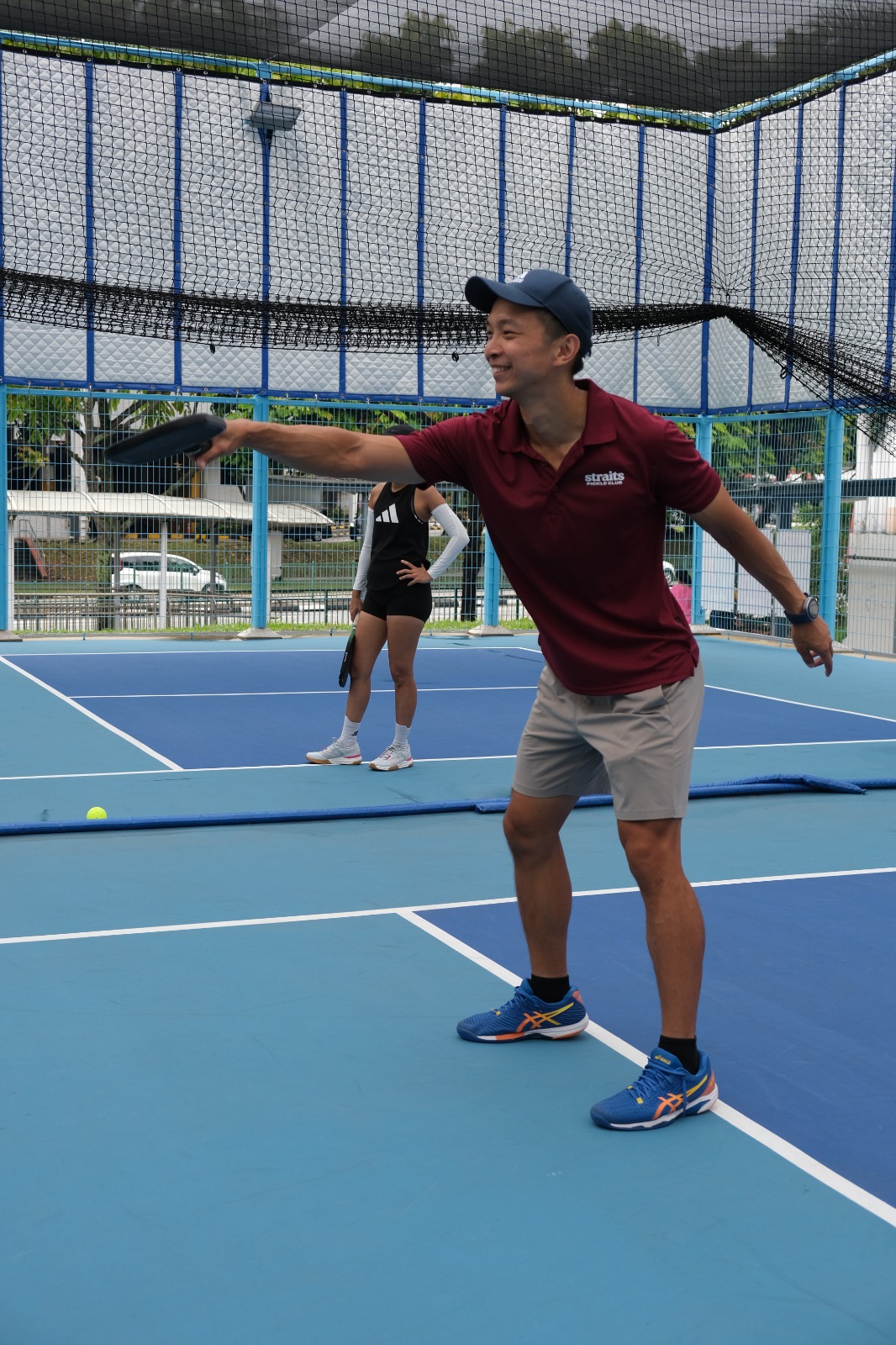
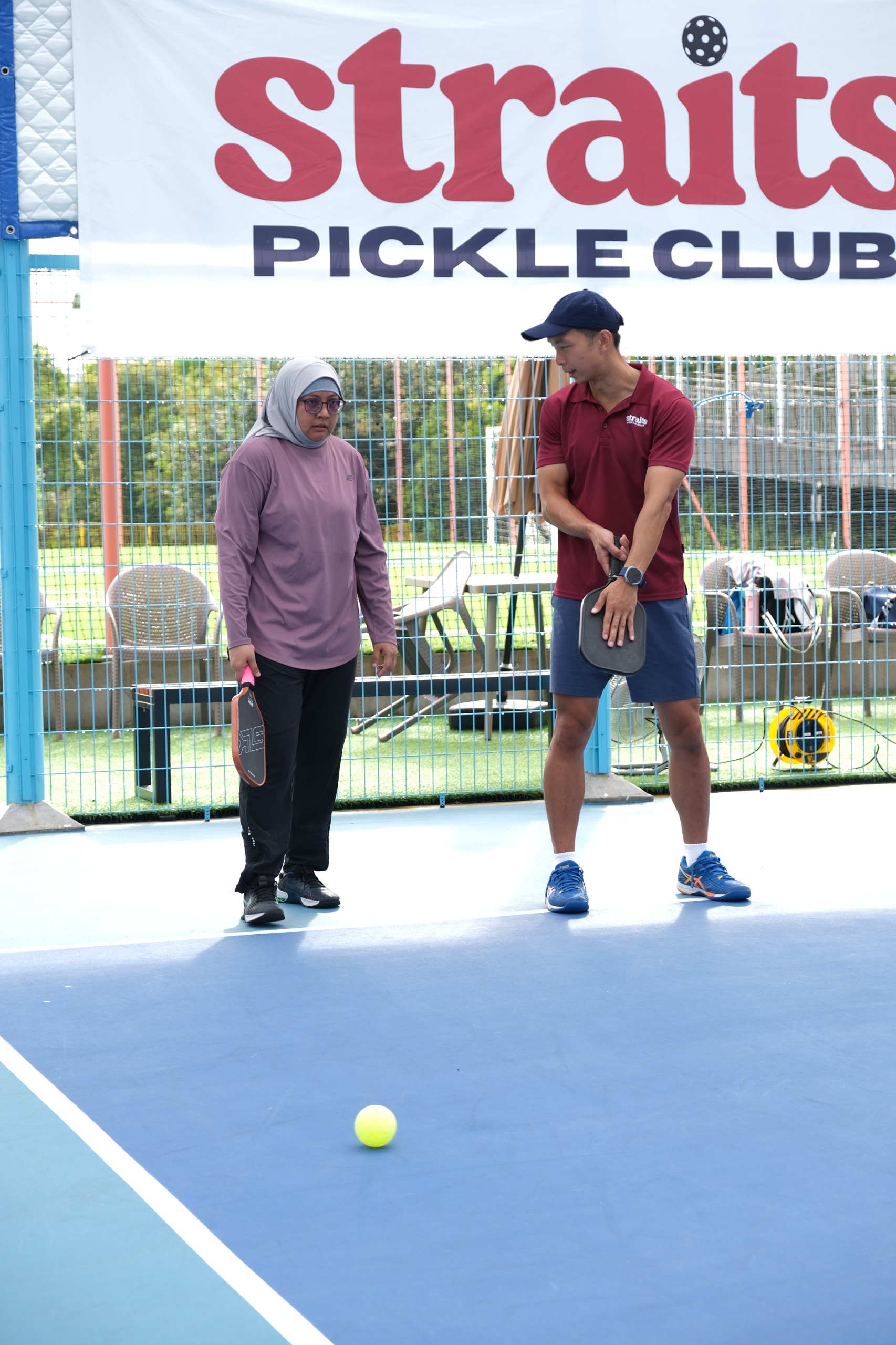
1) What is your coaching philosophy in one or two sentences?
My coaching philosophy is centred on helping each student understand not just how to execute a shot, but when and why to use it in real gameplay. I believe good coaching should be practical, personalised, and encouraging, with a focus on building confidence, problem-solving, and making the learning process enjoyable.
2) How do you structure a typical lesson? Please describe what a beginner and an intermediate/advanced player can expect.
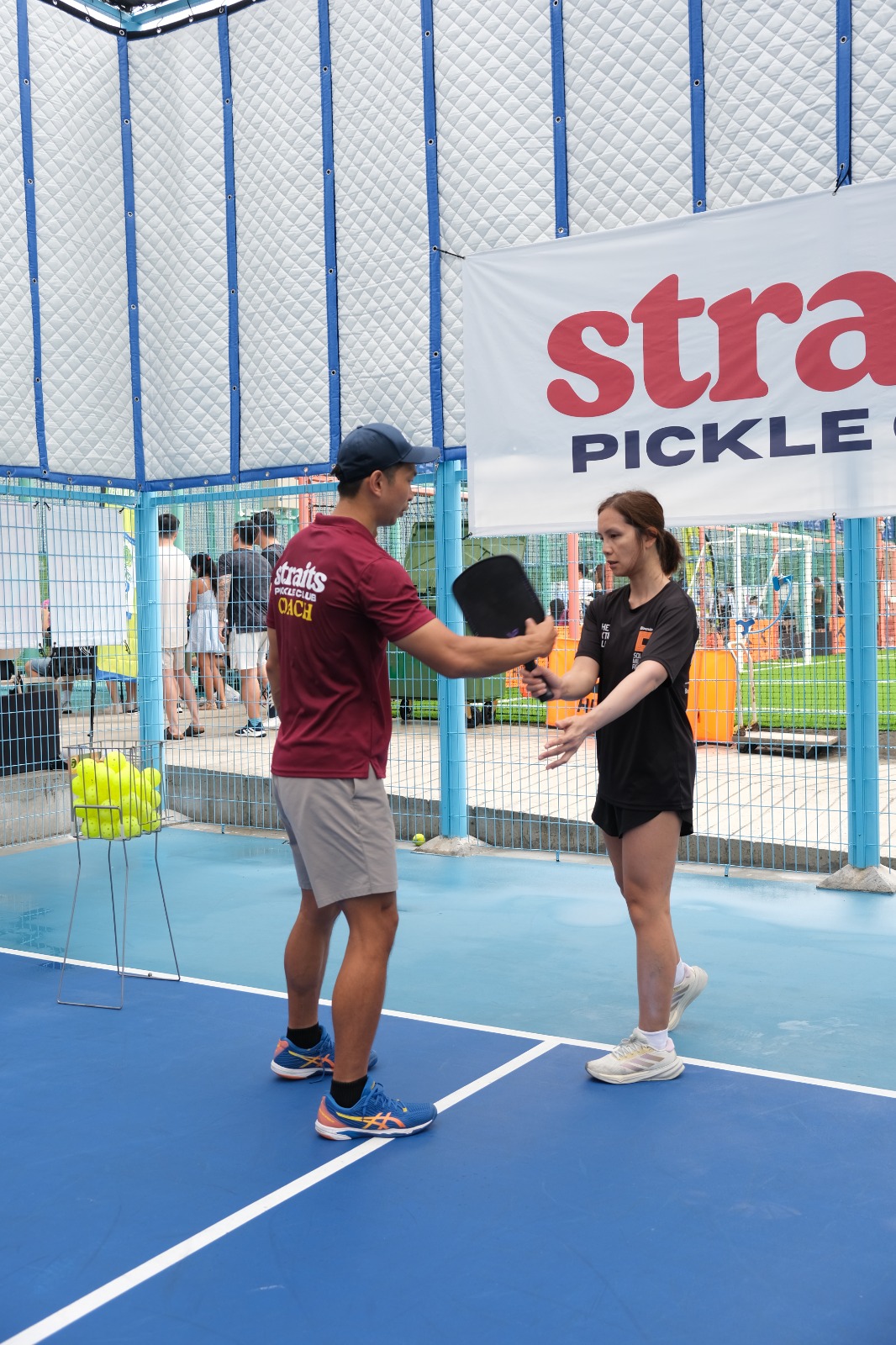
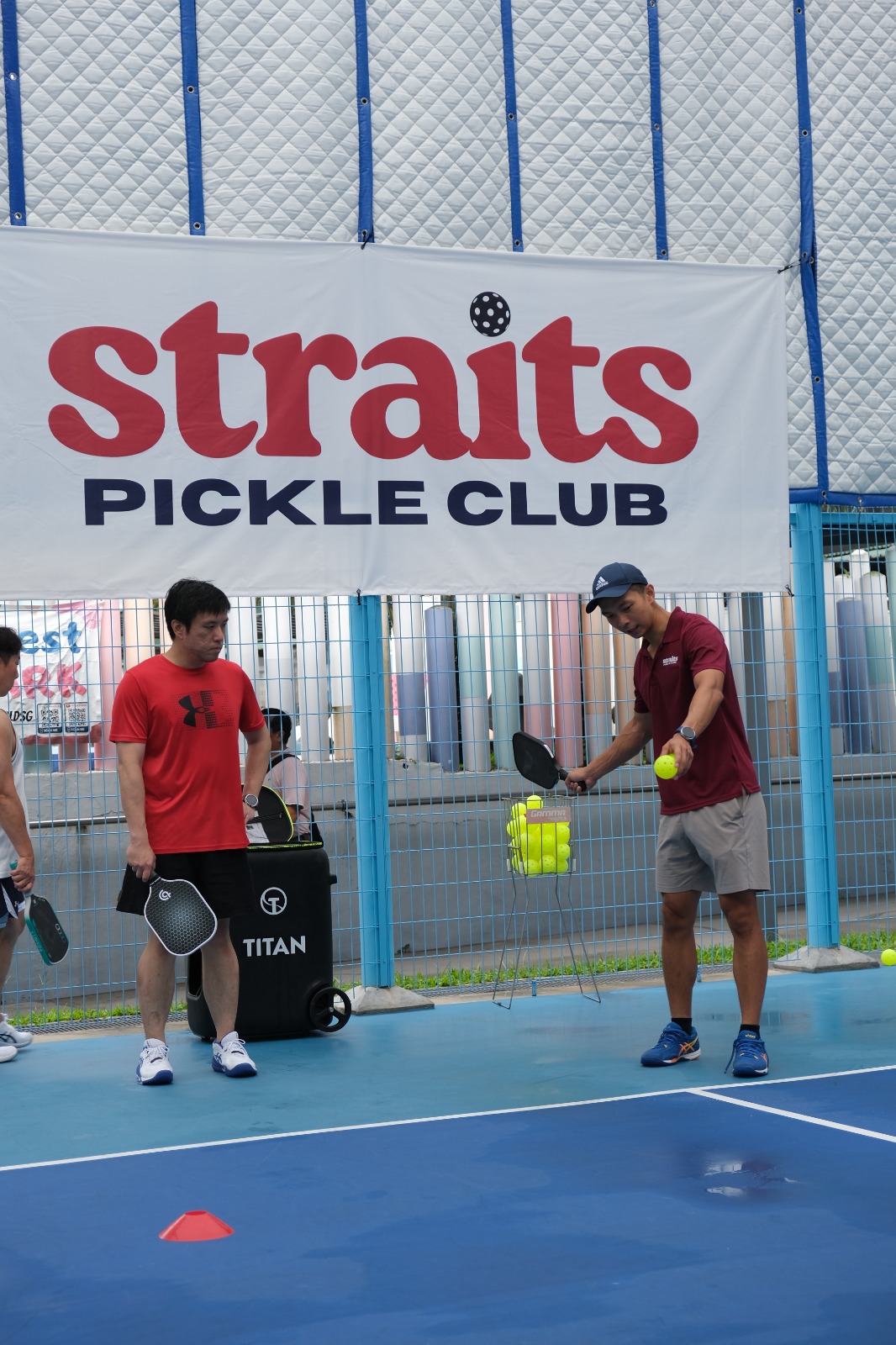
I usually begin the first five minutes by walking through and reflecting with the student on their recent social games – what worked well, what did not, and where they felt challenged. From there, we identify the key issues and diagnose the problem through isolated drills designed to correct and fine-tune specific areas.
Once the technique is addressed, we progress into more realistic gameplay scenarios. This helps students reinforce the technique while also understanding the bigger picture: how, when, and why to apply it during a point. If there is time left after the main segment, we may touch briefly on a secondary pre-identified weakness, with quick pointers and cues to correct fundamental mistakes.
Show More ↓
1) What is your coaching philosophy in one or two sentences?
My coaching philosophy is centred on helping each student understand not just how to execute a shot, but when and why to use it in real gameplay. I believe good coaching should be practical, personalised, and encouraging, with a focus on building confidence, problem-solving, and making the learning process enjoyable.
2) How do you structure a typical lesson? Please describe what a beginner and an intermediate/advanced player can expect.
I usually begin the first five minutes by walking through and reflecting with the student on their recent social games – what worked well, what did not, and where they felt challenged. From there, we identify the key issues and diagnose the problem through isolated drills designed to correct and fine-tune specific areas.
Once the technique is addressed, we progress into more realistic gameplay scenarios. This helps students reinforce the technique while also understanding the bigger picture: how, when, and why to apply it during a point. If there is time left after the main segment, we may touch briefly on a secondary pre-identified weakness, with quick pointers and cues to correct fundamental mistakes.
The final five minutes are spent recapping the lesson, highlighting key takeaways, and, where useful, assigning simple “homework” for students to practise on their own.
3) Which single PB stroke or skill is non-negotiable for every player, and how do you teach it?
In terms of technique, I believe the drop/reset is the most important shot to master for players who want to progress to the next level. At a sub-3.5 level, players may sometimes get away with simply driving or ‘banging’ the ball. However, stronger opponents will usually be able to counter pace with ease, especially when both players are established at the net. To level the playing field, players need to learn how to drop their way into the kitchen and reset points when under pressure. Because the drop/reset is such a controlled and precise shot, it cannot be hit too hard or too soft – it has to be just right.
The way I teach it is by instilling the mindset that “less is more”. The goal is to minimise unnecessary movements or actions that may influence the flight of the ball and focus only on the important aspects of the shot, so players can achieve greater control and consistency.
4) Do you specialise in any areas?
I specialise in helping beginner to intermediate players build strong fundamentals and develop a better understanding of strategy, especially in doubles play. A key focus of my coaching is helping players transition from simply reacting to the ball to making more intentional decisions on court. This includes areas such as improving the soft game, handling pace, countering bangers, understanding court positioning, and learning how to construct points more effectively.
5) How do you support students who take longer to progress? Have you ever advised someone that Pickleball was not the right fit? Explain briefly.
By ensuring that they continue to enjoy the learning process, regardless of the pace of improvement. Not all students begin with the same sporting background, and not everyone comes for lessons with the same objective. Some students are working towards becoming more competitive, while others play mainly for the social aspect of the game. Either way, it is important to recognise and celebrate small wins so that students stay motivated and continue to see progress in their own way.
6) Share one rewarding or memorable student moment that made you proud.
One memorable moment involved a female student who was always keen to square up against male opponents but struggled at one point against hard hitters. She found it difficult to handle their pace and often felt forced into a defensive position despite having relatively sound technique. We worked on refining her counter volleys and, more importantly, shifted her mindset from one of defence to one of offence. That became the breakthrough she needed. She began thinking about how to neutralise pace with more aggressive counters and even punish weaker drives.
I remember feeling proud when she later told me she was able to go toe-to-toe with stronger male players and even relished the challenge of playing against ‘bangers’.
7) What practical advice would you give players considering coaching as a side hustle or full-time career?
Just because you enjoy playing Pickleball does not necessarily mean you will enjoy teaching others how to play the sport. Coaching requires a different skill set.
I would encourage aspiring coaches to ask themselves three questions. First, do you enjoy problem-solving? There is rarely a one-size-fits-all solution that works equally well for every student. Second, can you repeat the same concept three or more times when a student struggles to grasp it, without feeling like banging your head against the wall? Third, are you able to explain a concept in simple, layman terms without being long-winded? If the answer to all three questions isn't “yes”, then it may be worth reconsidering whether coaching is the right fit at the get-go.
Of course, some of the above can be self-improved so that shouldn't stop you if you have a passion for coaching. The surest way to determine if coaching is for you would be to get into the thick of it. Start by coaching friends and family, then friends of friends and eventually strangers, and get feedback while at it. Give yourself a runway to explore and, at the end of it, determine if you still feel strongly about coaching before deciding if it's a hobby or a career.
⸻
🎓Coaching Qualifications/Certifications
PPR Level 1
Years of playing Pickleball: 3
Years of Coaching: 1.5
🏆Accolades/medals/awards won
Pickleslam Team Event 2025: Gold
Pesta Sukan 2025, Open Mixed Doubles: Gold
Pesta Sukan 2025, Open Men's Doubles: Bronze
Show Less ↑